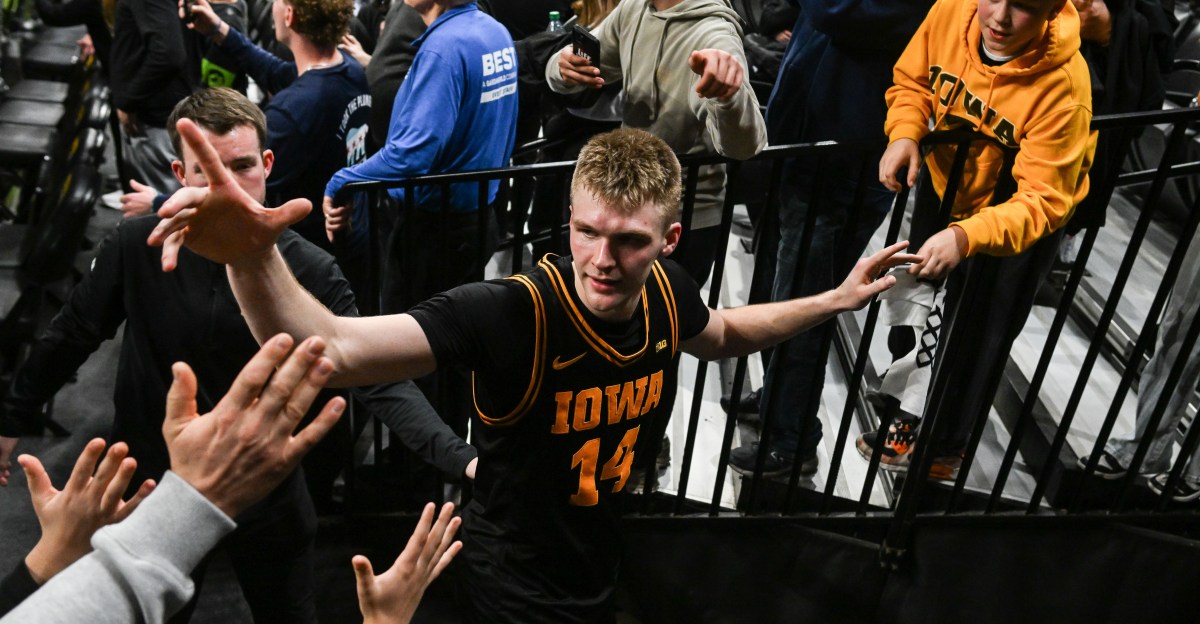
Hawkeyes Dominate No. 9 Nebraska in Thrilling 57-52 Upset, Ignite Carver-Hawkeye Arena
In a night that will long be remembered in Iowa City, the Hawkeyes delivered a stunning upset, defeating the No. 9 ranked Nebraska Cornhuskers 57-52. The victory, secured in front of a raucous home crowd at Carver-Hawkeye Arena, marked a significant milestone for the Iowa basketball program under head coach Ben McCollum, representing their first win against a ranked opponent in his tenure. The electric atmosphere culminated in a jubilant court storm by students, celebrating a hard-fought Iowa Upsets No. 9 Nebraska 57-52: Stirtz Leads Hawkeyes triumph that saw the Hawkeyes outmuscle the Huskers in key statistical categories.
The highly anticipated Nebraska vs Iowa: How Turnovers & Free Throws Decided 57-52 Game clash lived up to its billing, showcasing the intensity of Big Ten basketball. Iowa, now 19-7 overall and 9-6 in conference play, demonstrated remarkable resilience and strategic execution, particularly in the game's decisive moments. Nebraska, despite their No. 9 ranking and an impressive 22-4 overall (11-4 Big Ten) record coming into the game, struggled to find their rhythm when it mattered most, ultimately succumbing to Iowa's relentless pressure.
Clutch Performances and Game-Defining Moments
The narrative of this thrilling Nebraska Vs Iowa Basketball encounter was largely written by individual brilliance and critical team statistics. Leading the charge for the Hawkeyes was sophomore guard Bennett Stirtz, who delivered a career-defining performance with 25 points. Stirtz's scoring prowess was evident throughout, as he shot 8-of-22 from the floor, including two crucial three-pointers, and a perfect 7-of-7 from the free-throw line. His heroic efforts included a steal and a subsequent three-pointer late in the second half that gave Iowa a vital five-point lead, even after landing hard on his back.
Complementing Stirtz's offensive explosion, Cooper Koch contributed 10 points for Iowa, hitting a pair of clutch free throws with just 24 seconds left to extend Iowa's lead to five, effectively icing the game. Tavion Banks also made a pivotal defensive play with a steal in the closing seconds, sealing the Hawkeyes' memorable victory. These late-game heroics highlighted Iowa's ability to execute under pressure, a characteristic often found in successful teams.
For the Huskers, Pryce Sandfort, a former Hawkeye returning to Iowa City, led the team with 13 points. Sandfort's performance included two three-pointers, making him Nebraska's all-time single-season leader in made threes – a personal highlight despite the team's loss. Jamarques Lawrence also chipped in 11 points for Nebraska. However, despite these individual efforts, the Huskers faced significant scoring droughts, notably going more than six minutes without a field goal in the critical closing stages of the game, which proved insurmountable.
Statistical Edge: Free Throws, Rebounds, and Turnovers Decide the Day
While Nebraska actually outshot Iowa from the field (18-of-44 compared to Iowa's 17-of-51), the Hawkeyes' victory was a masterclass in winning the margins. Three key areas stood out as decisive factors in this particular Nebraska Vs Iowa Basketball matchup:
- Free Throw Efficiency: Iowa's precision from the charity stripe was exemplary, hitting a staggering 17-of-18 attempts (94.4%). This included their final seven points of the game, effectively putting the contest out of reach. In stark contrast, Nebraska struggled, converting only 11-of-14 (78.6%) of their free throws, a difference that proved costly in a tight game.
- Rebounding Dominance: The Hawkeyes asserted their physical dominance on the glass, outrebounding Nebraska by a significant margin of 37-24. Crucially, Iowa snatched 12 offensive rebounds, creating vital second-chance opportunities and extra possessions that helped offset their lower field goal percentage. This hustle and physicality were instrumental in wearing down the Huskers.
- Capitalizing on Turnovers: Both teams committed 12 turnovers, but Iowa was far more effective in converting those into points. The Hawkeyes generated 13 points off Nebraska's miscues, demonstrating their ability to transition quickly and punish opponents. Nebraska, on the other hand, only managed a paltry three points from Iowa's 12 turnovers, a glaring disparity in efficiency that highlighted Iowa's sharper execution.
These statistics underscore a fundamental principle in basketball: while field goal percentage is important, winning the battles for free throws, rebounds, and turnover conversion often dictates the outcome, especially in close, high-stakes contests like this one. Iowa's coaching staff clearly emphasized these areas, and their players delivered.
Tactical Shifts and Second-Half Resilience
The game began with Iowa asserting an early advantage, leading 33-28 at halftime despite a late three-pointer by Nebraska's Cale Jacobsen. Bennett Stirtz had 13 points at the break, showcasing his offensive potential early. The second half saw several momentum swings. Iowa started strong with a Cooper Koch three-pointer, extending their lead to 36-29. However, Nebraska, demonstrating why they are a ranked team, mounted a comeback. They capitalized on an Iowa scoring drought, going on a 6-0 run to cut the deficit to two points. The Huskers even took a brief lead (43-41) around the 11-minute mark, making six of their last seven shots as Iowa struggled offensively.
Coach McCollum's team, however, showed remarkable poise. Despite missing six of seven shots and enduring a nearly three-minute scoring drought, they held Nebraska scoreless for an even longer period (4:30), preventing the Huskers from fully capitalizing on their momentum. This defensive grit was a testament to Iowa's strategic adjustments and sheer determination. As the game wound down, Iowa's ability to draw fouls and hit their free throws, coupled with Nebraska's offensive struggles, ultimately sealed the deal. The roar of the crowd, reaching a fever pitch with every made free throw and defensive stop, undoubtedly played a part in Iowa's late-game surge.
A Court Storm and What it Means for Both Programs
The final buzzer brought an eruption of joy from the Carver-Hawkeye Arena faithful, as students poured onto the court to celebrate with their Hawkeyes. A court storm is more than just a celebration; it symbolizes a moment of extraordinary achievement, a shared experience between players and fans, and a tangible marker of an upset of significant magnitude. For Iowa, this victory against a top-10 opponent provides a massive boost to their confidence, their Big Ten standings, and their potential NCAA Tournament resume. It validates the hard work and resilience shown throughout the season and signals a positive trajectory for the program under Ben McCollum.
For Nebraska, while a tough road loss, it serves as a valuable learning experience. The importance of free-throw shooting, consistent rebounding, and capitalizing on turnover opportunities are stark lessons from this game. The Huskers still boast an excellent record and remain a formidable force in the Big Ten, but this loss highlights areas for refinement as they head into the final stretch of the regular season and prepare for postseason play. The intensity of games like this Nebraska Vs Iowa Basketball showdown is what makes Big Ten competition so compelling, offering both thrilling victories and crucial lessons.
Conclusion
The Hawkeyes' 57-52 victory over No. 9 Nebraska was more than just a win; it was a statement. Fueled by Bennett Stirtz's exceptional scoring, a dominant effort on the boards, and nearly flawless free-throw shooting, Iowa outmuscled a formidable opponent. The resulting court storm was a fitting tribute to a team that played with heart, executed under pressure, and delivered a memorable night for their fans. This thrilling encounter perfectly encapsulated the passion and unpredictability of college basketball, leaving both teams with valuable insights as they continue their respective quests in the challenging Big Ten Conference.